
Table of Contents
Finding trustworthy IPTV suppliers is one of the most important steps in building a smooth, high-quality internet television experience. With the market expanding rapidly and new services launching regularly, the range of options available to consumers and businesses has never been wider — or more varied in quality.
Not all IPTV suppliers deliver the same level of service. Stream stability, channel breadth, device support, and customer care differ enormously from one provider to the next. Choosing based on price alone is one of the most common mistakes buyers make, and it almost always leads to a frustrating experience.
This guide walks you through everything you need to know — what to look for, how to compare your options, and how to get started once you’ve made your choice. Users should comply with local laws and licensing regulations when subscribing to any internet television service. Content availability may vary by region.
What Are IPTV Suppliers and What Do They Offer
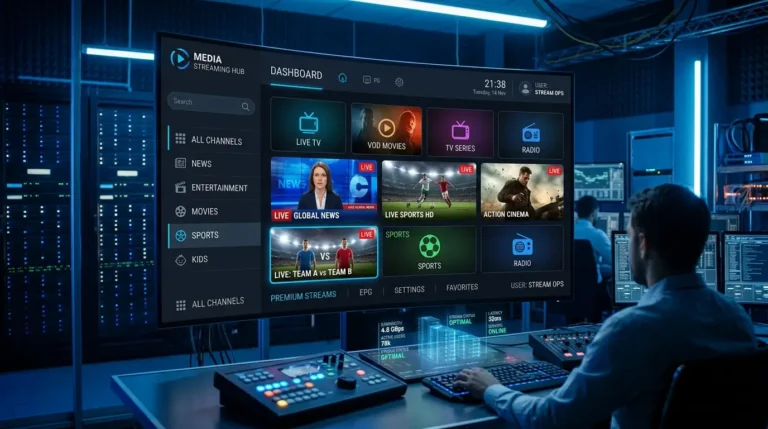
IPTV suppliers are companies or services that deliver television content over internet protocol networks. Rather than traditional cable or satellite infrastructure, content is streamed from servers directly to your device via a broadband connection — giving you access to live channels, on-demand libraries, and catch-up programming through a single subscription.
A typical offering from internet TV suppliers includes:
- Live linear television — real-time channels across news, sports, entertainment, and international content
- Video-on-demand (VOD) — a library of films, series, and documentaries accessible at any time
- Catch-up TV — recently aired programming stored for a set period so you can watch on your schedule
- Electronic program guide (EPG) — a scheduling interface that shows what’s on now and upcoming
- Multi-device support — access across smart TVs, smartphones, tablets, streaming sticks, and set-top boxes
The quality and scope of these offerings vary significantly between suppliers. Some focus exclusively on live television, while others offer comprehensive hybrid packages combining live and on-demand content in a single plan.

Key Qualities That Separate Good IPTV Suppliers from Bad Ones
Understanding what makes a reliable supplier is essential before you spend a single penny. Here are the qualities that consistently distinguish high-performing internet TV services from poor ones.
Stream Stability and Uptime
The single most important factor when evaluating IPTV suppliers is stream reliability. A service that buffers, freezes, or drops streams during peak hours — particularly during live events — delivers a genuinely poor experience regardless of how competitive its pricing appears.
Look for suppliers that publish uptime guarantees, have active user communities with positive independent reviews, and offer trial periods so you can test stability before committing to a subscription.
Server Infrastructure
Reputable suppliers invest in robust, geographically distributed server networks. This reduces latency, improves stream quality, and ensures consistent performance even when large numbers of subscribers are watching simultaneously. Ask whether the service uses dedicated servers or relies on shared hosting — the answer matters enormously for stream reliability.
Channel Count vs Channel Quality
A high channel count is a common marketing tactic among suppliers, but raw numbers mean little if the feeds are unstable or the content irrelevant to your viewing habits. Prioritize services that offer a curated, well-maintained lineup over those competing purely on volume.
Device Compatibility
The best services support a wide range of devices — Android TV, Apple TV, Amazon Fire Stick, smart TVs, iOS and Android smartphones, and dedicated set-top boxes. Before subscribing, confirm that your preferred devices are fully supported by the supplier you’re considering.
Customer Support Responsiveness
Technical issues are inevitable with any internet service. Suppliers that offer responsive support — via live chat, ticketing systems, or clear setup documentation — are significantly more reliable long-term partners than those with minimal or slow-response customer care.
Types of Services Offered by IPTV Suppliers
The market for internet television services covers several distinct categories. Understanding the differences helps you identify which type of supplier best matches your needs.
Live TV Focused Suppliers
These services prioritize real-time channel delivery — the closest digital equivalent to traditional cable or satellite. They’re the right choice for viewers who rely on live news, sports coverage, and scheduled programming. Stream quality and low latency are the critical performance metrics for this category.
VOD-Heavy Suppliers
Some services build their offering around large on-demand libraries rather than linear television. These suppliers suit audiences who prefer watching films and series on their own schedule without following a broadcast timetable. Library size, update frequency, and content organization are the key evaluation criteria here.
Hybrid Suppliers
Many of the strongest options in the market combine live channels with a substantial VOD library in a single subscription. Hybrid services offer the broadest viewing flexibility and represent the best overall value for households with varied viewing habits. Most established suppliers now operate in this category.
Reseller Suppliers
Some IPTV suppliers operate as resellers — they license content access from upstream providers and repackage it under their own brand. This is a common model in the industry. The key question with resellers is whether the upstream infrastructure is solid, as performance ultimately depends on the original source.
How to Compare and Vet Your Options
With so many services available, a structured approach to comparison saves time and prevents costly mistakes.
Step 1 — Request a Trial Any reputable supplier will offer a short trial period — typically 24 to 48 hours — before you commit to a paid plan. Use this window to test stream quality across multiple channels and time periods, especially during peak evening hours when server load is highest.
Step 2 — Check Independent Community Reviews Marketing materials tell you what a supplier wants you to believe. Independent forums and review communities tell you what actual subscribers experience. Look specifically for recurring comments about buffering frequency, support response times, and how the service handles outages.
Step 3 — Verify Device Compatibility Before purchasing, confirm that the supplier’s app or M3U playlist is compatible with every device you intend to use. Test on at least one device during the trial period to rule out compatibility issues.
Step 4 — Evaluate Pricing Against Included Value Compare plans by what they include — channel count, VOD depth, simultaneous connection limits, and EPG quality — not just the headline price. A slightly more expensive service with rock-solid streams delivers better value than a cheaper one that buffers through your favourite content.
Step 5 — Test Customer Support Before Subscribing Send a pre-sales question and note how quickly and helpfully the team responds. A supplier that ignores potential customers is unlikely to prioritize existing subscribers when problems arise.
Use only authorized content sources and ensure your chosen service operates within applicable licensing frameworks.

Frequently Asked Questions
What is the difference between IPTV suppliers and traditional TV providers? Traditional TV providers deliver content via cable infrastructure or satellite signals. Internet TV services stream content over your broadband connection, offering greater flexibility, broader channel options, and typically lower costs — without requiring physical installation.
How do I know if an IPTV supplier is reliable? Look for services with active independent user communities, transparent uptime track records, responsive customer support, and trial periods. Avoid suppliers that make unrealistic promises or refuse to offer a test period before purchase.
What internet speed do I need for a stable stream? For HD streaming on a single device, a stable upload and download speed of 10–15 Mbps is generally sufficient. For 4K content or multiple simultaneous streams, aim for 25–50 Mbps. A wired ethernet connection is always preferable to Wi-Fi for consistent performance.
Can I use an internet TV service on multiple devices at once? Most suppliers offer multi-connection plans that allow two or more simultaneous streams under a single account. Always check the connection limit of your chosen plan before subscribing if multi-device use is a priority.
Are there long-term contracts with most suppliers? Most services offer flexible monthly, quarterly, and annual plans without long-term lock-in contracts. Annual plans typically offer the best per-month value, while monthly plans provide flexibility to switch if you’re unsatisfied.
Conclusion: Choose IPTV Suppliers That Match Your Standards
The right IPTV suppliers can completely transform how you watch television — delivering more content, greater flexibility, and better value than conventional broadcast services. The key is approaching the decision methodically: trial before committing, compare on value rather than price alone, and prioritize stream stability above everything else.
Whether you’re looking for live sports, international programming, on-demand films, or a comprehensive hybrid service, there’s a supplier out there that meets your needs. Take your time, test thoroughly, and choose a service that you can rely on day after day.
Start your search today — and make sure the first thing you request from any supplier is a trial.